
Real Estate Seller Lead Generation: The Complete Playbook
12+ proven strategies with cost benchmarks, conversion data, and a 90-day implementation plan for agents who want more listings.
1. Why Seller Leads Are the Real Growth Lever Right Now
Every agent wants more listings. Not because listings are glamorous (they aren't) but because listings are leverage. One listing generates buyer calls, open house leads, sign calls, and neighborhood awareness. A listing sells itself while you sleep, but a buyer lead demands twelve showings and a prayer.
The math is straightforward. The average listing agent earns a commission on a property that closes whether they show up to the closing table or not. The average buyer's agent drives 50,000 miles a year hoping three out of ten clients stop ghosting. Listings compound while buyer leads burn out.
And the market in 2026 is making this calculus sharper. Inventory remains tight in most metros. Agents who control listings control their market. Meanwhile, portal lead costs have risen 1,107% since 2015 while conversion rates have bottomed out at 0.4%. Spending $181 per lead and needing 250 of them to close a single deal isn't a business strategy. It's a subscription to frustration. (For a detailed breakdown of what every channel actually costs per closed deal, see our lead generation cost comparison guide.)
The NAR settlement that took effect in August 2024 adds another layer. With buyer agent compensation no longer offered through the MLS, sellers need agents who can articulate a clear marketing strategy beyond commission offers. Agents who have a multi-channel lead generation system (not just a Zillow subscription) now have a tangible competitive advantage in every listing presentation.
This guide covers 12 seller lead generation strategies that actually work, backed by real conversion data and cost benchmarks. No fluff, and no generic "post on social media" advice. Each strategy includes the investment required, expected conversion rates, and when it makes sense for your business.
What you'll learn: how to build a multi-channel seller lead engine that produces listing appointments consistently, regardless of your budget level.
2. Seller Lead Sources: What the Numbers Actually Say
Before you pick strategies, you need to understand the market. Not all seller leads are created equal, and the gap between the best and worst lead sources is enormous.
| Lead Source | List Rate | Avg Days to List | Cost Model | Best For |
|---|---|---|---|---|
| Expired listings | 44% | 30 days | $50–200/mo subscription + time | Phone-confident agents |
| FSBOs | 27.8% | 43 days | $50–200/mo subscription + time | Patient, consultative agents |
| Sphere of influence | Varies (high) | Varies | $0 (relationship-based) | Agents with 3+ years experience |
| Home valuation funnels | 5–15% | 60–90 days | $200–500/mo (platform + ads) | Digital-savvy agents |
| Geographic farming | 1–3% (long-term) | 6–12 months | $300–800/mo | Agents building a brand |
| Portal leads (Zillow, etc.) | 0.4% | 90+ days | $300–1,000+/mo | Large teams with ISAs |
| Predictive analytics | 2–5% | 6–12 months | $300–1,000/mo | Agents playing the long game |
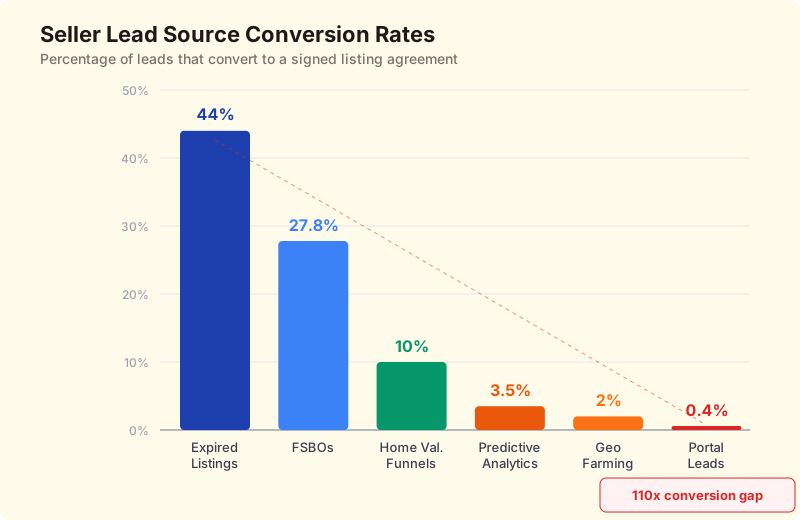
Look at that table and the strategy becomes obvious: expired listings convert at 44% while portal leads convert at 0.4%. That's a 110x difference. Yet most agents dump their budget into portals because it feels easier than picking up the phone. Easier isn't the same as effective.
With that context, let's break down each strategy in detail.
3. Expired Listing Prospecting
Expired listings are the single highest-converting seller lead source in real estate. The data isn't close: a 44% list rate with an average of 30 days from first contact to signed listing agreement. No other lead source comes within striking distance.
Why Expireds Convert So Well
An expired listing is a seller who has already made the decision to sell. They hired an agent. They prepped their home. They endured showings. The only thing that went wrong is the outcome. That seller doesn't need to be convinced to sell. They need to be convinced that you will succeed where the last agent failed.
That's a fundamentally different conversation than cold prospecting. You aren't selling the idea of selling. You are selling your competence.
The Numbers Behind Expired Prospecting
REDX reports 64,000+ active expired leads available nationally every week. The value per contact hour ranges from $1,200 to $2,250, making it one of the highest-ROI activities an agent can perform. At roughly $150 per month for a data subscription plus a power dialer, the cost of entry is minimal compared to the potential return.
| Metric | Expired Listings | Portal Leads | Advantage |
|---|---|---|---|
| Conversion to listing | 44% | 0.4% | 110x higher |
| Avg days to list | 30 | 90+ | 3x faster |
| Monthly cost | ~$150 | $300–$1,000+ | 2–7x cheaper |
| Leads needed per close | ~5 | 250 | 50x fewer leads |
How to Build an Expired Listing System
The agents who succeed with expireds don't wing it. They build a repeatable system:
- Subscribe to a data provider. REDX, Vulcan7, or Landvoice. Pull fresh expired data every morning before 8 AM.
- Dedicate 70% of your daily prospecting time to expireds. This isn't a side hustle. Top producers make expired calls their primary morning activity, typically 8:30–10:30 AM.
- Lead with value, not a pitch. Your opening should acknowledge their frustration and offer a specific insight about why their home didn't sell. "I noticed your home was listed at $425,000. The three comparable sales in your neighborhood this quarter averaged $408,000, and all three had updated kitchens. Can I share what I think happened?"
- Prepare a pre-listing packet. Before you call, have a comparative market analysis ready for their property. Sellers are tired of agents who promise the world and deliver a generic pitch. Show up with data.
- Follow up relentlessly. 80% of expired listings relist within 60 days. If you don't get the appointment on the first call, follow up every three to five days with new market data or a sold comparable.
4. FSBO Conversion
For-sale-by-owner sellers are the second-highest-converting lead source at 27.8%, with an average of 43 days to listing agreement. The longer conversion time reflects the FSBO mindset: these sellers believe they can do it themselves, and they need to experience the difficulty before they are open to hiring help.
The FSBO Conversion Psychology
FSBOs aren't anti-agent. They are anti-commission. The typical FSBO seller is trying to save $15,000–$30,000 in commission costs. They have watched YouTube videos about selling without an agent, and they believe their home will sell itself because it is in a nice neighborhood.
Most FSBOs fail. NAR data shows that FSBO homes sell for a median of 23% less than agent-assisted sales. But telling a FSBO this on the first call will get you hung up on. Instead, play the long game.
The Patient FSBO System
- First contact: Offer help, not a pitch. Call to introduce yourself and offer a free comparable market analysis. No strings attached. "I work this neighborhood and I pulled your home's comps just to see where the market is. Want me to send them over?"
- Week 2: Send market activity updates. Share what sold nearby, what went pending, and at what price. Position yourself as a market expert, not a salesperson.
- Week 3–4: Offer to host an open house for them. This gives you face-to-face time, access to their home, and buyer leads. Most FSBOs will accept because it costs them nothing.
- Week 5–6: Check in on progress. By this point, most FSBOs have experienced showings that lead nowhere, lowball offers, or unqualified buyers. They are more receptive to a conversation about professional representation.
- Ongoing: Stay in touch every two weeks. The average FSBO takes 43 days to convert. Some take 90. Patience wins this game.
The key insight is that FSBO conversion isn't about selling yourself. It's about being available when the seller's frustration reaches a tipping point. You want to be the first agent they call when they decide they need help.
Automate your expired & FSBO follow-up
RobinFlow tracks every lead, schedules touchpoints, and sends market updates automatically — so you never lose a listing to slow follow-up.
5. Home Valuation Landing Pages
Home valuation funnels are the best passive seller lead generation strategy available to agents in 2026. The concept is simple: create a landing page where homeowners can get an instant estimate of their home's value in exchange for their contact information.
Why Home Valuation Funnels Work
Homeowners are curious about their home's value even when they aren't actively planning to sell. NAR data shows that 44% of homeowners check their home's value at least once a year. A home valuation landing page captures that curiosity and turns it into a lead.
The conversion mechanics are straightforward. A homeowner searches "what is my home worth" or "home value estimate [city]." They land on your page. They enter their address. Your automated valuation model (AVM) delivers an instant estimate. You capture their name, email, and phone number. Then you follow up with a personalized comparative market analysis that is more accurate than the automated estimate.
This one-two punch (instant AVM for speed, personalized CMA for accuracy) is the framework that top-producing agents use to turn curiosity into listing appointments.
Cost and Conversion Benchmarks
| Component | Monthly Cost | Expected Output |
|---|---|---|
| Home valuation platform | $50–200 | Landing page + AVM integration |
| Facebook/Instagram ads | $150–400 | 20–80 leads/month at $3–8/lead |
| Google Ads (seller keywords) | $200–500 | 10–30 leads/month at $12–50/lead |
| SMS follow-up platform | $30–75 | 2x conversion rate vs. email-only |
| Total investment | $430–1,175 | 30–110 seller leads/month |
Building a High-Converting Valuation Funnel
Not all home valuation pages are created equal. The difference between a page that converts at 3% and one that converts at 15% comes down to execution details:
- Keep the form short. Address and contact info only. Every additional field reduces conversion. You can qualify the lead after they opt in.
- Show a real value, not a teaser. Pages that say "Enter your info to see your estimate" without delivering convert poorly. Show the AVM number immediately, then offer a more accurate personalized CMA as the follow-up hook.
- Mobile-first design. Over 70% of home valuation searches happen on mobile. If your page isn't optimized for a phone screen, you're losing the majority of your traffic.
- Immediate SMS follow-up. Texting within five minutes of a lead submission increases conversions over 100% compared to email-only follow-up. Set up automated SMS triggers.
- Personalized CMA within 24 hours. This is where you differentiate from Zillow's Zestimate. Deliver a CMA that references specific neighborhood trends, recent sales, and property condition factors that an algorithm can't account for.
The beauty of this strategy is that it runs in the background. Once your ads are set up and your follow-up sequences are automated, you generate seller leads while you focus on other activities. It isn't the highest-converting channel, but it's the most scalable one for agents who want consistent pipeline volume.
For a detailed walkthrough on building these funnels step-by-step, including ad templates and follow-up sequences, see our home valuation funnel guide.
6. Sphere of Influence Marketing
Your sphere of influence (past clients, friends, family, neighbors, business contacts) is statistically the highest-converting lead source available to any agent. NAR data shows that 74% of sellers work with an agent they have used before or who was referred by someone they know. That number isn't a rounding error. Three out of four sellers already have an agent in mind before they start searching.
The SOI Numbers That Should Change Your Priorities
| SOI Metric | Data Point | Source |
|---|---|---|
| Sellers who use repeat or referred agent | 74% | NAR Profile of Buyers and Sellers |
| Sellers who chose agent via friend referral | 39% | NAR Profile of Buyers and Sellers |
| Repeat client business (avg agent) | 20% | NAR Member Trends |
| Referral business from past clients | 21% | NAR Member Trends |
| Experienced agents (16+ years), repeat + referral share | 40%+ | NAR Member Trends |
The pattern is clear: agents who systematically nurture their sphere build businesses that compound over time. After 16 years in the business, the top agents get more than half their deals from people who already know them. That isn't marketing. It's relationship capital paying dividends.
How to Systematize Your SOI
Most agents know they should "stay in touch" with past clients. Very few actually do it consistently. The fix is turning your SOI from a vague intention into a system:
- Build your database. Every person you have ever worked with, every friend who owns a home, every neighbor, every vendor. The average agent's SOI is 200–500 people. If you can't name 200 people who know you are a real estate agent, that is your first problem.
- Monthly value touchpoints. Send a monthly market update for their neighborhood. Not a generic newsletter. A specific email that says "Three homes sold in your subdivision last month. Here's what they sold for." This keeps you top of mind and positions you as the local expert.
- Quarterly personal contact. A phone call, coffee, handwritten note, or drop-by. The goal is one personal touchpoint every 90 days for your top 50 contacts. Referrals come from personal connection, not from emails.
- Annual home anniversary. On the anniversary of their home purchase, send a personalized note with a current value estimate. "Happy home anniversary! You bought your home two years ago for $380,000. Based on recent sales, it is now worth approximately $415,000. That's a solid $35,000 in equity." This triggers the "what's my home worth?" conversation naturally.
- Ask for referrals directly. The agents who get the most referrals are the ones who ask. After every closing, after every positive interaction, after every favor. "Do you know anyone thinking about selling? I have capacity for two more clients this quarter."
There's a broader industry shift reinforcing this approach. In 2026, the most successful agents are retreating from complex, high-overhead lead generation and doubling down on smaller, deeply engaged databases. The mass-volume model (buy 500 leads, hope three convert) is giving way to relationship-first strategies where every contact in your sphere receives genuine, personalized attention. Authenticity outperforms polish. A personal text about their neighbor's sale beats a templated drip campaign every time.
7. Geographic Farming
Geographic farming is the long game. You pick a neighborhood of 500 to 1,000 homes, and you become the dominant agent through consistent marketing, community involvement, and market expertise. It takes 6 to 12 months to gain traction, but once it compounds, farming becomes the most reliable source of listing appointments in your business.
The ROI of Consistent Farming
Direct mail, still the backbone of geographic farming, delivers a 112% ROI according to the Association of National Advertisers. Handwritten letters specifically pull a 3–5% response rate, which is triple what generic farming postcards achieve. The economics of farming look like this:
| Farm Size | Monthly Mailer Cost | Annual Investment | Expected Listings (Year 2+) | Potential GCI |
|---|---|---|---|---|
| 500 homes | $300–400 | $3,600–4,800 | 3–6 listings | $30,000–60,000 |
| 750 homes | $450–600 | $5,400–7,200 | 5–9 listings | $50,000–90,000 |
| 1,000 homes | $600–800 | $7,200–9,600 | 7–12 listings | $70,000–120,000 |
The critical detail most farming guides miss: year one is break-even at best. You are building brand recognition, not closing deals. The ROI kicks in year two and compounds year after year as residents begin to associate your name with real estate in their neighborhood.
How to Pick the Right Farm
Choosing the wrong farm is the most expensive mistake you can make, because you won't know it failed for 12 months. Evaluate these four factors before committing:
- Turnover rate. Target neighborhoods with 5–8% annual turnover. Below 5%, there aren't enough transactions to sustain your investment. Above 8%, you are competing with too many other agents farming the same area.
- Current agent saturation. Pull MLS data for the last two years. If one agent already has 30%+ market share, pick a different farm. You need a fragmented market where no one agent dominates.
- Home value sweet spot. Farm where the average home price times your commission rate produces enough GCI per transaction to justify the investment. A $200,000 average home at 2.5% commission yields $5,000 per side. A $450,000 average home yields $11,250. Your ROI timeline changes dramatically based on this number.
- Proximity. You need to be present in the neighborhood. Attending HOA meetings, hosting community events, walking the streets. If the farm is a 45-minute drive from your office, you won't show up enough.
The Modern Farming Playbook
Traditional farming (postcards only) is outdated. The most effective farm strategies combine physical and digital touchpoints:
- Monthly just-sold or market update mailer. Postcards with real data. "Your neighbor's home at 142 Oak Street just sold for $475,000 in 8 days. Here's what that means for your home's value."
- Targeted Facebook and Instagram ads. Geo-fence your farm area with ads showing your recent sales, market updates, and home valuation offers. Budget $100–200 per month. See our Facebook & Instagram ads playbook for the full campaign setup.
- Quarterly door-knocking or community event. Host a neighborhood yard sale, sponsor a food truck Friday, or organize a block party. Physical presence builds trust in ways that mailers cannot.
- Neighborhood-specific landing page. Create a page on your website dedicated to your farm area with sold data, active listings, and a home valuation tool. Link to it from your mailers.
8. Social Media Lead Gen
Social media is the top lead quality source for 39% of agents according to NAR research. But "posting on social media" isn't a strategy. It's an activity. The agents who actually generate seller leads from social platforms are doing specific things that most agents skip entirely.
What Works on Social Media for Seller Leads
The content that generates seller leads isn't the content most agents post. Forget the "just listed" and "just sold" posts. Those generate congratulations from other agents, not leads from homeowners. What actually drives seller inquiries:
- Market data posts. "Three homes sold in [Neighborhood] last month. Average price: $425,000. Average days on market: 12. Here's what's driving this." Posts with specific, local data consistently outperform generic real estate content by 3–5x in engagement.
- Before-and-after home prep content. Show a home before staging and after. Show the impact of curb appeal improvements. Sellers watch this content and think, "I wonder what my home would look like."
- Seller success stories. Not testimonials, but stories. "My client John was worried his home needed $40,000 in renovations before listing. We listed as-is with professional photos and strategic pricing. Sold in 9 days, $12,000 over asking." Stories with specific details build credibility.
- "What's your home worth?" interactive content. Polls, quizzes, and value estimates. Interactive content generates 2–3x more comments and shares than static posts, and every comment is a potential lead to follow up with.
The Platform Breakdown for Seller Leads
| Platform | Best Content Type | Seller Lead Potential | Time Investment |
|---|---|---|---|
| Market updates, local group engagement, video walkthroughs | High (largest homeowner audience) | 30–60 min/day | |
| Reels showing home transformations, stories with polls | Medium-High | 30–45 min/day | |
| YouTube | Neighborhood tours, market analysis videos, seller education | High (long-term SEO value) | 2–4 hours/week per video |
| TikTok | Quick tips, market hot takes, behind-the-scenes | Medium (younger audience) | 15–30 min/day |
| Market analysis, industry insights | Low for residential sellers | 15 min/day |
The Facebook Group Strategy
One of the most effective social media lead generation tactics is the quiz-and-group strategy, proven by RE/MAX agent Terri Hart who generated 1,010 leads in two weeks. The approach: create a fun quiz like "Where Should You Live?" or "What's Your Home Style?" using a tool like LeadQuizzes, then share it across 30 local Facebook groups. The quiz captures contact information, and the local groups provide free distribution to homeowners in your target area.
The key is providing genuine value through the quiz, not creating a thinly veiled lead capture form. If the quiz is entertaining and shareable, it spreads organically, and your cost per lead drops to near zero.
For a complete breakdown of paid social advertising for seller leads, see our guide on Facebook and Instagram ads for seller leads.
9. Paid Lead Platforms
Paid lead platforms (Zillow Premier Agent, Realtor.com, BoldLeads, and similar services) occupy a specific place in the seller lead ecosystem. They are expensive, they deliver volume, and they convert poorly without a dedicated follow-up system. Understanding when these platforms make sense and when they are a waste of money matters more than most agents realize. For a step-by-step framework to evaluate any platform against your budget and business model, see our seller lead platform evaluation checklist.
Platform-by-Platform Comparison
| Platform | Monthly Cost | Lead Type | Exclusivity | Avg Conversion Rate |
|---|---|---|---|---|
| Zillow Premier Agent | $300–$1,000+ (ZIP dependent) | High-intent buyers and sellers | Non-exclusive | ~0.4% |
| Realtor.com | $200–$800 | Transaction-ready searchers | Non-exclusive | ~0.5% |
| BoldLeads | $649+ | Exclusive seller leads | Exclusive | 2–4% |
| Offrs | $400–$800 | Predictive seller leads | Exclusive by ZIP | 2–5% |
When Paid Platforms Make Sense
Paid platforms aren't inherently bad, but most agents misuse them. Here's when they work:
- You have an ISA or dedicated follow-up team. Portal leads require immediate response (under five minutes) and persistent follow-up (12–18 month nurture campaigns). Solo agents rarely have the bandwidth for this level of follow-up.
- You are scaling a team. When you need consistent lead volume to feed multiple agents, paid platforms provide predictable flow. The conversion rate is low, but the math works at scale when your cost per acquisition is below your GCI per close.
- You are entering a new market. If you are new to an area with no SOI, no farm, and no local reputation, paid leads can jumpstart your pipeline while you build organic channels.
When to Avoid Paid Platforms
Paid platforms are a poor investment when:
- You are a solo agent without time for aggressive follow-up
- Your budget is under $500 per month (insufficient for meaningful lead volume)
- You haven't maximized free channels like SOI, expireds, and FSBOs first
- You expect high conversion without a CRM and automated follow-up system
For a detailed breakdown of platform costs and performance, see our seller lead platform comparison guide.
10. Predictive Analytics
Predictive analytics platforms like SmartZip and Offrs use big data (250+ data points per homeowner including demographics, financial records, social activity, and property data) to identify homeowners who are likely to sell in the next 6 to 12 months. The accuracy claims hover around 70% in most markets.
How Predictive Analytics Works
The core proposition is simple: if you know who is likely to sell before they start thinking about it, you can be the first agent to build a relationship. By the time they are searching for "best real estate agent near me," you have already been in their inbox for six months.
The data sources these platforms use include:
- Tax records and property assessments
- Mortgage data (refinance activity, equity levels, loan age)
- Life event signals (job changes, retirement, divorce filings)
- Online behavior (real estate website visits, home improvement searches)
- Demographic patterns (age, family size, years of ownership)
The Reality Check on Predictive Analytics
What does 70% accuracy actually mean in practice? If the platform identifies 100 homeowners as likely sellers, 70 of them will list within 12 to 18 months. That sounds impressive, but you still need to convert those 70 into clients, and that conversion requires the same relationship-building, follow-up, and marketing that every other strategy demands.
| Predictive Analytics Factor | Reality |
|---|---|
| Accuracy claim | 70%+ identify likely sellers |
| Time horizon | 6–12 months before listing |
| Monthly investment | $300–$1,000 |
| Follow-up required | 6–12 months of consistent outreach |
| Best for | Agents who already have strong follow-up systems |
| Not suitable for | Agents wanting quick results |
Predictive analytics is a force multiplier, not a replacement for prospecting. It tells you who to target, but you still need to do the targeting.
AI-Enhanced Lead Intelligence in 2026
Predictive analytics has evolved beyond standalone platforms. In 2026, 89% of top-producing agents are projected to use AI-enhanced CRMs that integrate predictive scoring directly into their workflow. Tools like Fello work inside your existing CRM to identify, score, and surface leads most likely to sell within six months using property and market data. Lindy deploys AI agents that qualify leads and book appointments end-to-end. CrescendoAI handles 24/7 website visitor engagement with context-aware responses about specific listings.
The practical takeaway: predictive analytics is no longer a separate subscription you check manually. It's embedded in the CRM and marketing tools you already use. If your tech stack doesn't include some form of AI-driven lead scoring, you're operating with outdated intelligence while competitors get prioritized seller alerts automatically. Not sure which CRM to use? Our real estate CRM comparison guide breaks down Follow Up Boss, kvCORE, Sierra Interactive, and Lofty head-to-head.
For a head-to-head comparison of predictive platforms, see our RobinFlow vs Offrs and SmartZip comparison.
Turn your lead sources into a single pipeline
Connect all your lead channels — expireds, FSBOs, home valuation, social — into one dashboard with automated nurture sequences.
11. Content Marketing & SEO
Content marketing has the most attractive long-term economics of any seller lead strategy. The cost per lead starts high ($80 to $100 for the first few months) then drops to $5 to $20 as your content ranks and compounds. After 12 to 18 months, a well-executed content strategy generates seller leads for almost nothing.
Why Content Marketing Works for Seller Leads
Homeowners considering a sale search for information before they search for an agent. They Google "what is my house worth," "costs of selling a home," "how to prepare a house for sale," and "best time to sell a house in [city]." If your content answers those questions, you become their trusted resource. And when they are ready to hire an agent, you are already top of mind.
The content that generates seller leads isn't agent-focused. It's homeowner-focused. Write for the person with the question, not for your industry peers.
High-Impact Content Topics for Seller Leads
- Neighborhood market reports. "What's happening in [Subdivision] real estate: Q1 2026 sold data." Hyper-local content ranks quickly because it has low competition.
- Home valuation education. "How to figure out what your home is worth (and why Zillow's estimate might be off)." This topic captures high-intent sellers and positions you as an expert.
- Cost-of-selling breakdowns. "The real cost of selling a home in [City]: agent commissions, closing costs, repairs, and hidden fees." Financial content attracts serious sellers doing their homework.
- Seasonal timing guides. "Best time to sell a house in [State/City]." These pages generate consistent organic traffic year-round as homeowners research timing.
- Seller preparation guides. "What to fix before selling your house (and what to skip)." Practical content that homeowners bookmark and share.
Content Marketing Cost Trajectory
| Time Period | Monthly Investment | Expected Leads/Month | Cost Per Lead |
|---|---|---|---|
| Months 1–3 | $500–1,000 (writer + SEO) | 2–5 | $100–500 |
| Months 4–6 | $500–1,000 | 5–15 | $33–200 |
| Months 7–12 | $500–1,000 | 15–40 | $12–67 |
| Year 2+ | $300–500 (maintenance) | 30–80 | $4–17 |
The compounding effect is what makes content marketing so powerful. A blog post you write today continues to generate leads for years. Your 50th blog post benefits from the domain authority built by your first 49. This is the opposite of paid ads, where leads stop the moment you stop paying.
12. Open Houses as Lead Machines
Most agents think of open houses as a buyer lead activity. They are wrong. Open houses are one of the most effective in-person seller lead strategies when you know how to work the room.
The Seller Lead Opportunity at Open Houses
At every open house, roughly 30–50% of attendees are neighbors, not buyers. They come out of curiosity: they want to see the home's condition, compare it to their own, and get a feel for pricing in the neighborhood. These neighbors are your seller leads. They are actively thinking about home values, which is the first step in the decision to sell.
The Neighbor Conversion System
- Identify the neighbors. When someone walks in, ask if they are looking to buy or if they live in the neighborhood. Most neighbors will tell you immediately.
- Engage on home values. "What do you think your home is worth? I just ran the comps for this area, and I would be happy to send you a valuation for your home too." This transitions the conversation from casual to actionable.
- Collect contact info naturally. "I send out a monthly market update for [Neighborhood] with sold prices and active listings. Want me to add you?" This is a soft opt-in that positions you as a resource.
- Follow up within 48 hours. Send a personalized home valuation with a note: "Great meeting you at the open house. Based on the sold data I have for your street, here is what I think your home is worth."
- Add to your SOI nurture system. These neighbors join your database for ongoing market updates. Some will sell in three months and some in three years, so stay in front of them.
Strategic Open House Selection
Not all open houses generate equal seller lead opportunities. Choose properties that:
- Are in neighborhoods with 5–8% annual turnover
- Are priced in the area's sweet spot (median price range attracts the most foot traffic)
- Have been recently updated (neighbors will want to see the renovations and compare)
- Are on streets with high visibility and foot traffic
Two open houses per week in your target farm area, combined with consistent follow-up, can generate 8–15 qualified seller leads per month. That's a substantial pipeline, all without spending a dollar on advertising.
13. Paid Digital Advertising
Paid digital advertising (Google Ads, Facebook Ads, and Instagram Ads) gives you precise control over who sees your message and when. For seller leads specifically, the cost and performance vary dramatically by platform.
Google Ads for Seller Leads
Google Ads captures high-intent sellers who are actively searching. Someone typing "sell my house in [City]" or "how much is my home worth" is much further along in their decision process than someone scrolling past your Facebook ad. The cost per lead is higher ($12–$150 depending on keyword competition), but the conversion rate is 3–5x higher than social media leads.
Facebook and Instagram Ads for Seller Leads
Social media ads excel at reaching sellers earlier in their decision timeline. A homeowner who is idly considering selling in the next year might not be searching on Google yet, but they will click on a "What's your home worth?" ad that appears in their feed. Cost per lead is lower ($3–$8 for home valuation campaigns) but conversion takes longer because these leads are earlier-stage.
| Platform | Avg CPL (Seller) | Conversion Rate | Best Ad Type | Ideal Budget |
|---|---|---|---|---|
| Google Ads | $12–$150 | 3–5% to appointment | Search ads on seller-intent keywords | $500–$2,000/mo |
| Facebook Ads | $3–$8 | 1–2% to appointment | Home valuation lead forms | $300–$800/mo |
| Instagram Ads | $4–$10 | 0.5–1.5% to appointment | Video walkthroughs + value offers | $200–$600/mo |
The Ad-to-Appointment Framework
Running ads without a conversion system is like pouring water into a bucket with holes. The framework that produces listing appointments from paid ads has six steps:
- Ad drives to a dedicated landing page (not your homepage)
- Landing page captures name, email, phone, and address via a home valuation or market report offer
- Instant delivery sends an automated email or text with the promised value (valuation, report)
- Speed-to-lead follow-up means a phone call or text within 5 minutes of submission
- Drip nurture runs an automated email and text sequence over 30–90 days for leads who don't convert immediately
- Retargeting ads show follow-up ads to website visitors who didn't convert, keeping you top-of-mind
Each step matters: a great ad with no landing page wastes money, and a great landing page with no follow-up wastes leads. The system only works when every step is connected.
A Keller Williams agent running this exact framework through Facebook ads generated 50+ motivated seller leads at under $4 each and closed two new listings in the first month. That's a total ad spend of approximately $200 producing two listings. The framework works; the question is execution consistency.
14. Direct Mail & Offline Funnels
Direct mail is the oldest lead generation strategy in real estate, and it still works. The Association of National Advertisers reports a 112% ROI on direct mail marketing, and handwritten letters pull a 3–5% response rate, triple what postcards achieve.
But the most effective direct mail strategies in 2026 aren't purely offline. The best agents use direct mail as the entry point to a digital funnel.
The Offline-to-Online Bridge
Modern direct mail works as a four-step bridge from mailbox to CRM:
- Send a mailer with a QR code. The mailer features a compelling hook ("Your neighbor's home at 142 Oak Street just sold for $475,000. Scan to see what your home is worth.") with a QR code linking to your home valuation landing page.
- QR code lands on a personalized page. The landing page is customized for the recipient's neighborhood, showing recent sales and an instant valuation tool.
- Capture contact info digitally. The homeowner enters their address and contact info for a detailed valuation. Now you have a digital lead from an offline touchpoint.
- Follow up via automated sequences. The lead enters your CRM for email and text follow-up, just like any digital lead. But this lead is warmer because they received a physical piece of mail first. Tangibility builds trust.
Direct Mail Types and Response Rates
| Mail Type | Response Rate | Cost Per Piece | Best Use Case |
|---|---|---|---|
| Handwritten letters | 3–5% | $1.50–$3.00 | Targeted prospecting to high-value homes |
| Just-sold postcards | 1–2% | $0.75–$1.50 | Geographic farming consistency |
| Market update newsletters | 0.5–1% | $1.00–$2.00 | Brand building in farm area |
| Home valuation offers with QR code | 2–4% | $1.00–$2.00 | Driving online lead capture |
Frequency Matters More Than Format
The research is clear: direct mail effectiveness is directly correlated with consistency. Mailing every 3 to 5 weeks keeps you top-of-mind. Mailing once a quarter gets you forgotten. Per 1,000 letters sent consistently, you can expect 10–30 calls, a handful of prospects, and zero to two contracts per mailing cycle.
That sounds low until you compound it. Mail 750 homes monthly for 12 months and you have made 9,000 impressions. By month 12 residents recognize your name, by month 18 they assume you are the neighborhood expert, and by month 24 they call you first.
15. Budget-Based Frameworks
You don't need to implement all 12 strategies. In fact, trying to do everything at once is a recipe for doing nothing well. The right approach depends on your budget, your experience level, and your strengths.
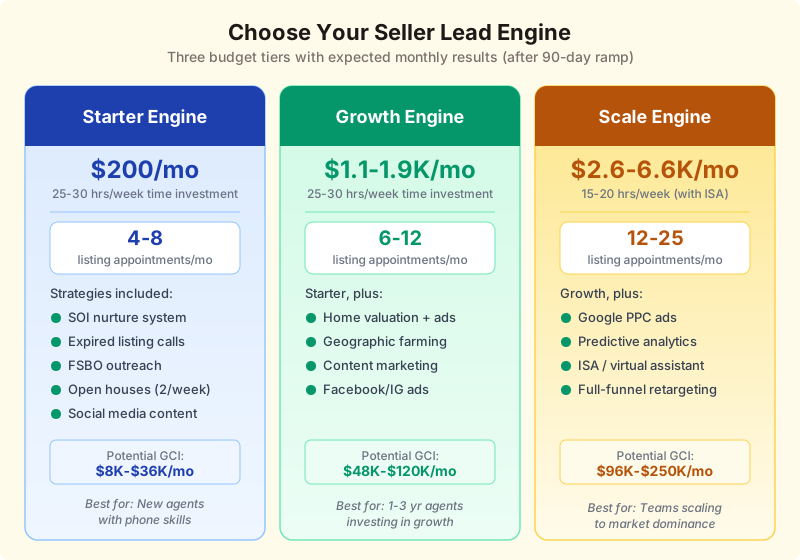
Here are three frameworks based on monthly marketing budget.
The $0–$500/Month Starter Engine
At this budget level, your time is your primary investment. Focus on high-conversion, low-cost activities:
| Strategy | Monthly Cost | Time Investment | Expected Results (Month 3+) |
|---|---|---|---|
| SOI nurture system | $0 | 2–3 hours/week | 1–2 referrals/month |
| Expired listing calls | $150 (REDX) | 1–2 hours/day | 2–4 listing appointments/month |
| FSBO outreach | $0 (same subscription) | 30 min/day | 1–2 appointments/month |
| Open houses (2/week) | $50 (signs, refreshments) | 6 hours/week | 5–10 seller leads/month |
| Social media content | $0 | 30 min/day | Building brand recognition |
| Total | $200 | 25–30 hours/week | 4–8 listing appointments/month |
This is a hustle-based engine. It demands phone skills and consistent time investment. But the ROI is extraordinary: $200 per month in tool costs can produce four to eight listing appointments, translating to one to three closings per month for a skilled agent. At a median commission of $8,000–$12,000 per side, that is $8,000–$36,000 in monthly GCI from a $200 investment.
The $500–$2,000/Month Growth Engine
At this budget level, you layer paid channels on top of your prospecting foundation:
| Strategy | Monthly Cost | Time Investment | Expected Results (Month 3+) |
|---|---|---|---|
| Everything from Starter Engine | $200 | 20–25 hours/week | 4–8 appointments/month |
| Home valuation landing page + ads | $400–800 | 2–3 hours/week (management) | 15–40 leads/month |
| Geographic farming (500 homes) | $300–400 | 3–4 hours/month | Building (results in 6–12 months) |
| Content marketing (2 posts/month) | $200–500 | 4–6 hours/month | 5–15 organic leads/month (6+ months) |
| Total | $1,100–1,900 | 25–30 hours/week | 6–12 listing appointments/month |
The $2,000+/Month Scale Engine
At this budget level, you're building a multi-channel machine that generates leads from every direction:
| Strategy | Monthly Cost | Time Investment | Expected Results (Month 6+) |
|---|---|---|---|
| Everything from Growth Engine | $1,100–1,900 | 25–30 hours/week | 6–12 appointments/month |
| Google PPC (seller keywords) | $500–1,500 | 2 hours/week | 10–30 high-intent leads/month |
| Predictive analytics platform | $300–800 | 3–4 hours/week | Building pipeline (6+ month payoff) |
| ISA or virtual assistant | $500–2,000 | Saves 15–20 hours/week | 2x follow-up conversion rate |
| Full-funnel retargeting | $200–400 | 1 hour/week | 15–25% higher conversion across all channels |
| Total | $2,600–6,600 | 15–20 hours/week (with ISA) | 12–25 listing appointments/month |
16. The Full Funnel
Generating seller leads is only half the battle. Converting those leads into listing appointments is where most agents fall short. The data is stark: 40% of agents cite lead generation as their top challenge, but the real challenge for most is lead conversion.
The Speed-to-Lead Problem
Research shows that responding to a lead within five minutes makes you 21x more likely to qualify them than waiting 30 minutes. Yet the average agent response time to a new lead is over four hours. In that gap, the seller has contacted two other agents, started a Zillow search, and forgotten your name.
The Seller Lead Conversion System
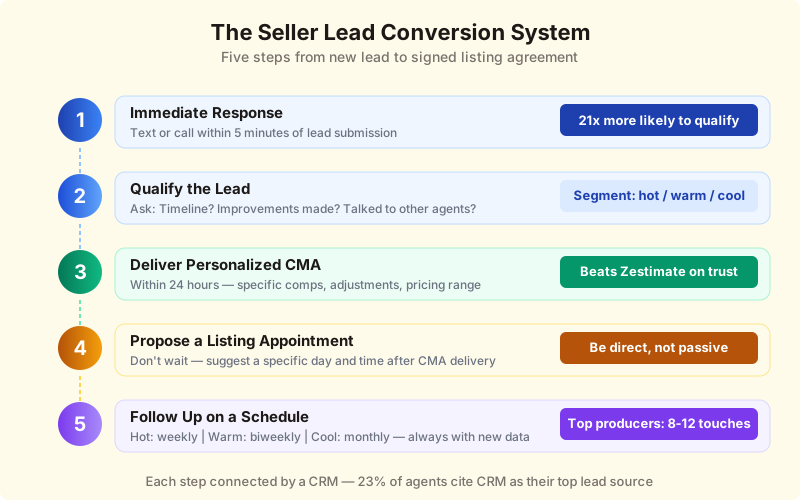
This is the step-by-step system that top-producing agents use to convert seller leads into listing appointments:
- Immediate response (under 5 minutes). Text or call every new lead within five minutes. If you can't do this yourself, automate the first touch with an SMS that says "Hi [Name], I just received your home valuation request. I am pulling the latest sold data for your neighborhood and will have a detailed report to you within 24 hours. Any specific questions about selling?" This buys you time to follow up personally.
- Qualify the lead (first conversation). Ask three questions: What is your timeline for selling? Have you made any major improvements to the home? Have you spoken with any other agents? These questions tell you whether this is a hot lead (selling in 30 days) or a nurture lead (6–12 months out).
- Deliver a personalized CMA within 24 hours. Not a Zillow estimate. A detailed comparative market analysis that references specific comparable sales, adjusts for condition and upgrades, and provides a pricing range with strategy recommendations. This is your chance to demonstrate expertise.
- Propose a listing appointment. Don't wait for the seller to ask. After delivering the CMA, propose a meeting: "Based on the data, I think your home is worth $415,000–$430,000. I would love to walk through the property so I can give you a tighter number and show you my marketing plan. What does your Thursday look like?"
- Follow up on a schedule. For leads who aren't ready yet, set a follow-up cadence: weekly for hot leads (0–30 day timeline), biweekly for warm leads (1–6 months), monthly for cool leads (6–12 months). Each follow-up includes new market data or a relevant article, never a "just checking in" call.
CRM: The Engine Behind Conversion
Twenty-three percent of agents cite their CRM as their top lead source , not because the CRM generates leads, but because it ensures no lead falls through the cracks. A CRM that automates follow-up sequences, tracks engagement, and reminds you when to call is worth more than any lead platform.
SMS follow-up specifically increases conversions by over 100% compared to email-only contact. If your CRM doesn't support automated text messaging, you're operating with one arm tied behind your back.
For a detailed comparison of CRM platforms for seller lead management, see our real estate CRM comparison guide.
Ready to build your seller lead engine?
Launch a branded landing page, automate follow-ups, and track every lead source — all from one platform.
Get Started Free17. Measuring What Matters
The real estate industry is obsessed with cost per lead. It's the wrong metric. Cost per lead tells you how much you spent to get someone's phone number, but it tells you nothing about how much you spent to close a deal.
Why Cost Per Lead Is Misleading
Consider two scenarios:
| Metric | Channel A (Facebook Ads) | Channel B (Expired Listing Calls) |
|---|---|---|
| Monthly spend | $800 | $150 (REDX subscription) |
| Leads generated | 100 | 20 |
| Cost per lead | $8 | $7.50 |
| Conversion rate | 1% | 44% |
| Listings taken | 1 | 8–9 |
| Cost per listing | $800 | ~$17 |
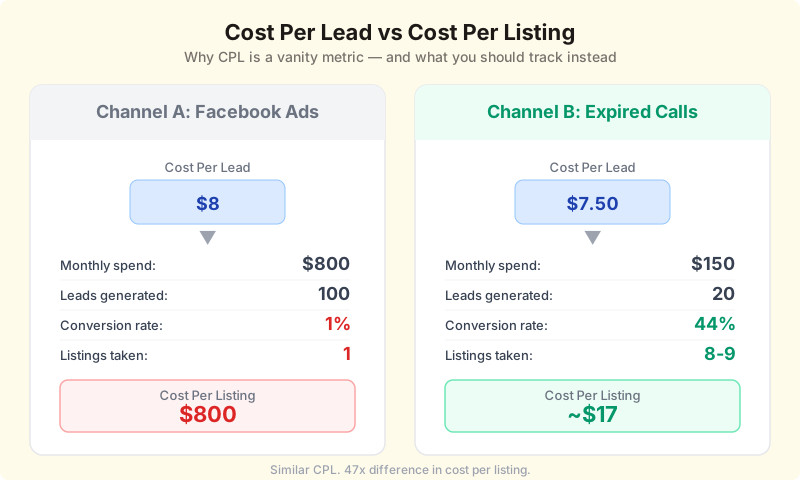
Channel A and Channel B have nearly identical costs per lead, but Channel B produces 8–9 listings while Channel A produces one. If you're only looking at CPL, these channels look equivalent when they aren't even close.
The Metrics That Matter
Track these five metrics for every lead channel you operate:
- Cost per listing appointment. How much does it cost to get a face-to-face meeting with a potential seller? This accounts for lead quality, not just lead volume.
- Cost per signed listing. How much does it cost to get a listing agreement signed? This accounts for your conversion skill at the appointment.
- Cost per close. How much does it cost from initial lead to closed transaction, including nurturing costs, marketing costs, and time investment? This is the only metric that tells you your true return on investment.
- Time to close. How long does it take from first contact to closed deal? Faster channels have lower carrying costs and better cash flow impact.
- Lifetime value per lead source. Does this channel produce clients who refer? Who list again in five years? Some channels produce one-time transactions while others produce lifetime clients.
18. Common Mistakes
After reviewing case studies and performance data across thousands of agents, the same mistakes surface repeatedly. Avoid these and you're already ahead of 80% of your competition.
Mistake 1: Chasing Shiny Objects
Every quarter, a new lead generation platform launches with bold promises. Agents jump from one platform to the next, never staying long enough for any single strategy to compound. The agents who dominate their markets have been doing the same things consistently for years.
Mistake 2: No Follow-Up System
The average agent follows up with a new lead 1.5 times, while top producers follow up 8–12 times over 90 days. That gap isn't a personality difference. It's a systems difference. Without a CRM automating follow-up, leads die in your inbox.
Mistake 3: Treating All Leads the Same
An expired listing seller who is ready to re-list this week needs a different approach than a home valuation lead who is 12 months from selling. Segment your leads by timeline and motivation, and create different follow-up sequences for each segment.
Mistake 4: Spending Before Prospecting
Agents who spend $1,000 per month on paid leads before maximizing free channels like SOI, expireds, and FSBOs are overcomplicating their business. The highest-ROI activities are free or nearly free. Start there, prove your conversion system works, then layer on paid channels.
Mistake 5: Measuring the Wrong Thing
As covered above, cost per lead is vanity while cost per close is reality. If you can't tell me your cost per close by channel, you don't know which channels are actually profitable.
19. Your 90-Day Action Plan
You have 12 strategies and a framework for choosing which ones to implement. The following 90-day plan works regardless of your experience level or budget.
Days 1–7: Foundation
- Audit your current lead sources: which channels are you using, what is your cost per close for each?
- Choose your budget tier (Starter, Growth, or Scale) and identify 3–4 strategies to implement.
- Set up or clean up your CRM so every lead lands in a system with automated follow-up sequences.
- Build your SOI database: list every person who knows you are a real estate agent. Aim for 200+ contacts.
Days 8–30: Launch
- Start daily prospecting: expired listing and FSBO calls, minimum 90 minutes per morning.
- Schedule two open houses per week in your target area.
- Send your first SOI market update with neighborhood-specific data to your entire database.
- If using paid channels, launch your home valuation landing page and initial ad campaigns.
Days 31–60: Optimize
- Review your first 30 days of data: how many leads, appointments, and listings from each channel?
- Double down on what is working. Cut or adjust what is not.
- Add your second wave of strategies: geographic farming, content marketing, or paid platforms depending on your budget tier.
- Refine your follow-up sequences based on lead feedback and appointment-setting data.
Days 61–90: Compound
- Your prospecting systems should be habitual by now. Track your metrics weekly.
- Your first content pieces should be ranking. Assess organic lead flow.
- Your farm area should have received two to three mailers. Brand recognition is beginning.
- Assess your cost per listing appointment by channel and reallocate budget accordingly.
20. Key Takeaways
- Expired listings convert at 44%, the highest of any seller lead source. If you are comfortable on the phone, this should be your primary prospecting activity.
- Your sphere of influence is undervalued. 74% of sellers use a repeat or referred agent. Systematize your SOI nurture before spending on paid channels.
- Cost per lead is the wrong metric. Track cost per close. A $200 lead that converts at 15% is more profitable than a $4 lead that converts at 0.5%.
- Home valuation funnels are the best passive strategy. Set up once with SMS follow-up and they generate leads while you sleep.
- Geographic farming compounds over time. Year one is brand building, year two is listing appointments. Commit to 24 months or pick a different strategy.
- Content marketing has the best long-term economics. Cost per lead drops from $100 to under $20 as your content compounds.
- Speed to lead matters more than lead source. Responding within five minutes makes you 21x more likely to qualify the lead.
- Stack strategies across the seller's timeline. Build a system that reaches sellers at every stage, from "just curious" to "need to sell this month."
- Consistency beats strategy. The agents who dominate their markets have been doing the same things for years. Pick your channels, commit, and execute.
21. What Comes Next
This guide gives you the strategies, the data, and the frameworks. The next step is picking your starting point and committing to 90 days of consistent execution.
If you're ready to build your seller lead engine, start with the strategies that match your budget and strengths. Focus on the Starter Engine if you are building from scratch, layer on Growth Engine strategies once your prospecting foundation is solid, and scale to the full multi-channel engine when your pipeline can support the investment.
The agents who consistently win listings aren't doing anything magical. They're doing the basics (prospecting, following up, building relationships, and staying top of mind) with relentless consistency. The strategies are simple and the execution is hard, but the math is in your favor if you show up every day.
For your next step, explore these related RobinFlow guides: