RobinFlow vs Ylopo
Ylopo delivers AI-powered volume. RobinFlow captures seller intent. Here\u2019s the data on pricing, lead quality, AI capabilities, and which approach actually delivers more listings.
How much does Ylopo cost per month?
Ylopo starts at $295–$500/month for the base Suite, but realistic all-in costs land at $1,364–$2,100/month for a solo agent once you add recommended ad spend ($500–$2,500/mo), a required external CRM ($69–$1,000/mo), and AI add-ons ($100/level each). Setup runs $1,000–$2,000 upfront. Here's the full breakdown — including how Ylopo's seller lead capabilities stack up against a purpose-built seller capture platform.
1. Why This Comparison Matters for Listing Agents
Ylopo has built a reputation as one of the most powerful AI-driven lead generation platforms in real estate, with an estimated 7,000–10,000+ agents and teams using its Facebook and Google advertising tools as of 2026 (InboundREM, 2026). Its rAIya AI assistant has facilitated over 68 million text conversations and engaged 7 million consumers (Ylopo, 2026). The technology is genuinely impressive.
But if you're a real estate agent evaluating Ylopo specifically for seller leads, you need to understand something the marketing doesn't emphasize: Ylopo was built for buyer leads first. Seller lead generation is a secondary feature — home valuation ads bolted onto what is fundamentally a buyer lead engine. That distinction shapes everything from lead quality to cost per listing to the data you receive about each prospect.
RobinFlow takes the opposite approach. It was purpose-built for seller lead capture through multi-step question flows that pre-qualify homeowners before they reach your CRM. The question isn't which platform generates more leads — it's which generates more listings.
This guide breaks down both platforms across pricing, lead quality, seller-specific capabilities, AI features, contract terms, and total cost per closed listing. No affiliate links. The numbers are sourced, and where we use vendor-claimed statistics, we say so.
2. Ylopo: Platform Deep Dive
Ylopo, headquartered in Calabasas, CA, operates as an AI-powered digital marketing platform that runs dynamic property ads on Facebook and Google, drives traffic to branded IDX websites, and uses artificial intelligence to nurture leads via text and voice. It's an end-to-end technology stack that handles everything from ad creation to initial lead engagement — but it requires you to bring your own CRM.
Core Technology Stack
Ylopo's technology centers on four pillars:
| Technology | What It Does | Primary Benefit |
|---|---|---|
| DARE (Dynamic Ads for Real Estate) | Auto-creates property-specific Facebook ads using live MLS data | Serves targeted ads featuring properties when leads browse listings on your site |
| Listing Rocket | Auto-generates Facebook ad campaigns tied to MLS listing lifecycles | New listing → automatic ad campaign, no manual setup |
| DyVA (Dynamic Video Ads) | Creates video property ads for Facebook/Instagram | Video ads at scale without production costs |
| Mission Control | Digital marketing dashboard with co-pilot/autopilot modes | Central command for ad spend, lead flow, and campaign performance |
The DARE system is Ylopo's standout feature for buyer leads. It monitors which listings prospects view on your IDX site and then serves them Facebook ads featuring those properties and similar options — a retargeting loop that keeps your brand in front of active buyers. For buyer lead generation, this is genuinely powerful technology that few competitors match.
AI Capabilities: rAIya Text and Voice
Ylopo's AI assistant, rAIya, operates across two channels — text and voice — and the vendor-reported statistics are substantial:
| Capability | rAIya AI Text | rAIya AI Voice |
|---|---|---|
| Response time | Within 60 seconds of lead registration | Automated calling cadence |
| Follow-up duration | 90-day automated sequence | 14 calls over 90 days |
| Operating hours | 24/7 | Mon–Sat 8AM–8PM, Sun 9AM–8PM |
| Engagement rate | 48% response rate (vendor-claimed) | 45% answer rate (vendor-claimed) |
| Total conversations | 68 million+ across all AI products (vendor-claimed) | N/A |
| Transfer rate | N/A | 9% hot transfer/appointment rate |
| Live transfer speed | N/A | Qualified leads connected in 5–8 minutes |
| CRM requirement | Multiple CRM integrations | Requires Follow Up Boss specifically |
Source: Ylopo AI page, accessed July 2026. All statistics are vendor-reported.
The AI Text qualification process automatically identifies lead timeframe, location preferences, budget, property specifications, pre-qualification status, agent representation, and appointment interest (Ylopo, 2026). That's legitimately useful data for buyer leads. For seller leads, the AI shifts messaging to: "We scanned our database and found 478 active buyers shopping for a home like yours" — a softer, less specific qualification compared to the buyer-side flow.
A critical limitation: rAIya AI Voice requires Follow Up Boss as your CRM. If you use kvCORE, Sierra Interactive, Lofty, or any other CRM, you can use AI Text but not Voice. Since AI Voice is where the appointment-setting happens (9% transfer rate, vendor-claimed), this CRM lock-in effectively forces a $69–$1,000/month Follow Up Boss subscription to access Ylopo's most powerful conversion tool.
3. Ylopo's Seller Lead Capabilities — The Secondary Use Case
Ylopo's seller lead tools are grouped under what they call the "Seller Suite" and "Ultimate Seller System (USS)." The toolset includes:
- Home valuation landing pages — Google PPC campaigns driving to pages where homeowners enter their address to receive an estimated value
- Automated Valuation Model (AVM) — Powered by HouseCanary and ATTOM data, delivering instant property value estimates (Ylopo Help Center, 2026)
- Seller Reports — Automated email alerts with property insights, including agent-override valuations alongside vendor AVMs
- Buyer Heatmap — Visual map of real-time buyer search activity, filterable by property type, price range, and neighborhood — positioned as a listing presentation tool (Ylopo Seller page, 2026)
- Cash Offer Landing Page — Entry point for cash offer inquiries
- Sold Video Ads — Automated video ads showcasing your transaction history
What the Seller Suite Actually Delivers
Ylopo reports seller leads at approximately $25 per lead via Google Ads (Ylopo blog, 2026). Industry benchmarks for Facebook-generated seller leads (home valuation) run $15–$35 per lead in 2026 (AmpliFire CPL report, 2026). These are competitive numbers at the top of the funnel.
But here's what the $25/lead figure doesn't tell you:
- What data you receive is limited. A home valuation lead gives you an address and contact information. You know they were curious enough to request a valuation — but you don't know their selling timeline, motivation, price expectations, or whether they've talked to other agents. The AI text follow-up attempts to qualify these data points after the fact, but response rates drop sharply once the initial valuation has been delivered.
- Seller leads are a fraction of total volume. Ylopo's infrastructure is buyer-first. The Dynamic Ads system, IDX website, and retargeting loops are all optimized for buyer engagement. Seller leads come through a separate Google PPC campaign and home valuation funnel — a real but secondary capability. Multiple third-party reviews confirm: "buyer leads perform better on the platform overall" (InboundREM, 2026).
- The quality problem scales. Ylopo's overall lead quality is rated 3 out of 10 by independent reviewers, with one revenue-generating opportunity per 50–70 leads acquired (InboundREM, 2026). Seller leads from home valuation pages skew even lower-intent because many homeowners request valuations out of curiosity — they're checking their equity position, not actively planning to sell.
Seller Lead Cost Per Closed Deal
Let's run the math on Ylopo's seller-specific economics. These calculations use data from our Best Seller Lead Platforms Comparison:
| Metric | Ylopo Seller Leads | Source |
|---|---|---|
| Cost per seller lead | $25 (vendor-reported) | Ylopo blog, 2026 |
| Leads per listing opportunity | 50–70 (blended; seller-specific likely higher) | InboundREM, 2026 |
| Monthly platform cost (solo agent all-in) | $1,364–$2,100 | Luxury Presence, 2026 |
| Ramp-up period before ROI | 3–6 months | DMR Media, 2026 |
| Estimated cost per seller closing | $2,400–$4,800 | Calculated (platform + ad spend ÷ seller closings) |
At $2,400–$4,800 per seller closing — before factoring in CRM costs and the 3–6 month ramp-up with zero return — Ylopo seller leads are among the most expensive in the industry on a per-deal basis. Compare that to expired listing prospecting via REDX at roughly $17 per listing (see our Expired Listing Playbook), or Facebook ads driving to a purpose-built seller question flow at $800–$1,600 per listing (see our Lead Generation Cost Comparison).
4. Ylopo Pricing: The True Cost of Ownership
Ylopo does not publish official pricing — all figures below are third-party estimates and should be confirmed during a demo call. This is consistent across every independent review source we checked (Luxury Presence, 2026; AgentAdvice, 2026; InboundREM, 2026).
| Cost Component | Estimated Range | Notes |
|---|---|---|
| Setup fee (one-time) | $1,000–$2,000 | Non-refundable |
| Ylopo Suite (base platform) | $295–$500/mo | Branded IDX website, ad management, Mission Control |
| Ylopo Suite+ (managed marketing) | $795+/mo | Enhanced managed marketing features |
| rAIya AI Text add-on | $100/level | Multiple levels available |
| rAIya AI Voice add-on | $100/level + $250 setup | Requires Follow Up Boss CRM |
| Recommended ad spend | $500–$2,500+/mo | Entry level: $250–$500/mo |
| External CRM (required) | $69–$1,000/mo | Ylopo has no native CRM; Follow Up Boss most common |
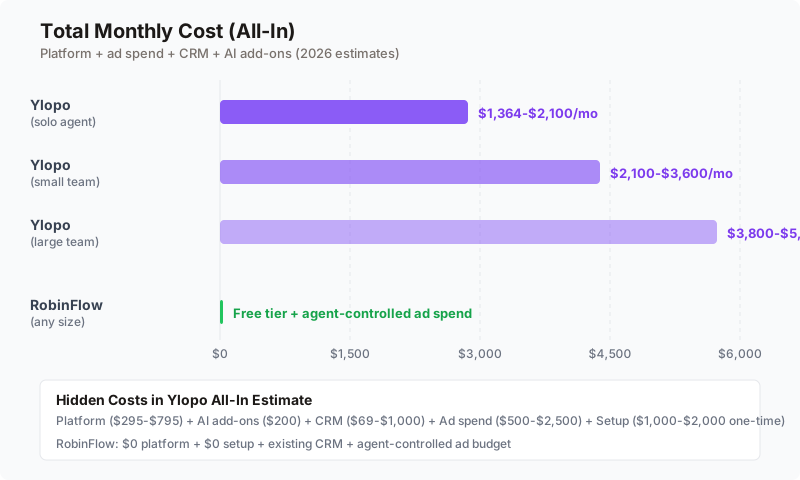
Total Cost of Ownership by Team Size
| Team Size | Estimated Monthly All-In | Annual Investment |
|---|---|---|
| Solo agent | $1,364–$2,100 | $17,368–$27,200 |
| Small team (2–5 agents) | $2,100–$3,600 | $26,200–$45,200 |
| Large team/brokerage | $3,800–$5,500+ | $47,600–$68,000+ |
Source: Luxury Presence pricing analysis, 2026. Ranges include platform, recommended ad spend, and CRM subscription.
Contract and Cancellation Terms
Ylopo's cancellation form states a 90-day cancellation period — you must provide 90 days' written notice, and your website is deactivated 90 days after cancellation (Luxury Presence, 2026). This has been a common agent complaint. One agent reported requesting a reduction to 30 days due to poor results, and Ylopo declined (HooQuest reviews, 2026).
Compare that to platforms offering month-to-month flexibility. If Ylopo isn't producing results by month three, you're still paying for months four, five, and six while the 90-day clock runs out. At $1,364–$2,100/month, that's $4,092–$6,300 in exit costs on top of whatever you've already spent.
Hidden Cost: The CRM Dependency
One of Ylopo's most significant hidden costs is the external CRM requirement. Unlike platforms like CINC or Sierra Interactive that include a native CRM, Ylopo requires you to purchase a separate CRM subscription. This isn't optional — without a CRM, you have no way to manage the leads Ylopo generates.
The CRM cost depends on which platform you choose and how many users you need:
| CRM | Starting Price | Team Price (5 users) | Ylopo AI Voice Compatible? |
|---|---|---|---|
| Follow Up Boss | $69/mo (Grow) | $499/mo (Team) | Yes — required for AI Voice |
| kvCORE (BoldTrail) | $300–$499/mo | $300–$499/mo | AI Text only |
| Sierra Interactive | $300/mo | $300+/mo | AI Text only |
| Lofty | $449/mo | $449+/mo | AI Text only |
Source: RobinFlow CRM Comparison Guide, 2026.
The critical detail: rAIya AI Voice — Ylopo's most powerful conversion feature with its 9% hot transfer rate — only works with Follow Up Boss. If you're already on kvCORE, Sierra, or Lofty, you either miss AI Voice entirely or pay for a second CRM subscription. Neither option is ideal, and neither is obvious from Ylopo's marketing materials.
For a solo agent on Follow Up Boss Grow ($69/mo), the CRM adds modestly to the total. But teams needing Follow Up Boss Team ($499/mo) are adding nearly $500/month just to enable a feature that's already behind an add-on fee. Stack that: $795 (Suite+) + $100 (AI Text) + $100 (AI Voice) + $499 (Follow Up Boss Team) + $1,000 (ad spend) = $2,494/month before the AI Voice setup fee or the one-time platform setup. That's $29,928/year — approaching the cost of a full-time inside sales agent in most markets.
The IDX Website: Asset or Liability?
Ylopo includes a branded IDX website in every subscription tier. On the surface, this sounds like a bonus — you get a property search site alongside your lead generation. But there's a critical distinction between an IDX site as a lead capture tool and an IDX site as a long-term digital asset.
Ylopo's IDX sites are template-based with limited customization options. Multiple independent reviewers describe them as offering "near-zero organic SEO value" (DMR Media, 2026). The sites are designed for paid traffic conversion, not organic rankings. This means:
- No organic lead generation. The site ranks for virtually nothing on Google. Every lead requires paid advertising to drive traffic — an ongoing expense with no compounding return.
- No residual value. When you cancel Ylopo, your website is deactivated after 90 days. Every dollar of ad spend you drove to that site, every backlink you earned, every piece of content you published on it — gone. You don't own the domain, the design, or the content infrastructure.
- Template duplication. With 7,000–10,000+ agents on the platform, your "branded" site looks structurally identical to thousands of others. Google's algorithms increasingly penalize template duplication in search rankings — not that it matters much when the site generates near-zero organic traffic to begin with.
Compare that to a standalone landing page on your own domain. Every ad dollar you spend drives traffic to a page you own. Every link it earns builds your domain authority. If you switch platforms, the page stays live. The digital asset appreciates over time instead of depreciating to zero on cancellation.
Paying $1,364+/month for seller leads that arrive with no intent data?
RobinFlow captures seller timeline, motivation, and price expectations before the lead reaches your CRM. Free to start — no setup fee, no 90-day cancellation trap.
5. The Market Saturation Problem
With an estimated 7,000–10,000+ agents on the platform (InboundREM, 2026), Ylopo faces a saturation challenge that individual agents bear the cost of. In competitive markets, multiple Ylopo agents are running identical ad campaigns, driving traffic to nearly identical IDX websites, and their prospects are receiving the same automated rAIya text messages from four, five, or six different agents simultaneously.
Think about that from the consumer's perspective. A homeowner searches for their home's value, fills out a form on what they think is a local agent's site, and then receives near-identical text messages from multiple agents within minutes — all powered by the same AI, all using the same scripts. The experience erodes trust rather than building it.
This matters more for seller leads than buyer leads. A buyer shopping for homes expects to interact with multiple agents. A homeowner considering selling their primary residence — the biggest financial decision of their year — wants to feel like they're working with a specific agent who understands their situation. Mass-automated outreach from a shared platform undermines that perception.
Ylopo cannot solve this problem without limiting how many agents use the platform in each market — which would contradict their growth model. For agents in markets with heavy Ylopo adoption (many major metros), the effective CPL is higher than headline figures because you're competing against other agents using the same tool, same AI, same messaging, for the same leads.
How to Check Saturation in Your Market
Before signing up for any platform, ask the sales rep directly: "How many agents in my zip code are currently active on Ylopo?" If they deflect or refuse to answer, that's informative. You can also check indirectly:
- Search Facebook for "[your city] home value" ads. If you see three or more similar-looking home valuation ads from different agents, chances are they're all Ylopo-powered.
- Ask agent colleagues. In a market with 500+ agents, finding someone who's used or is currently using Ylopo takes about three phone calls. Ask them about lead overlap.
- Request a home valuation on a Ylopo agent's site yourself. See what automated text messages you receive and from how many different agents in the following 24 hours. The experience tells you what your prospects will experience.
6. RobinFlow: Purpose-Built for Seller Lead Capture
RobinFlow takes a fundamentally different approach to seller lead generation. Instead of running ads that generate high volumes of low-intent leads and then using AI to sort through them, RobinFlow creates the mechanism for homeowners to tell you they want to sell — on their terms, with their specific details.
The Question-Flow System
RobinFlow provides branded landing pages built around multi-step question flows. When a homeowner visits your page — driven by your Facebook ads, Google ads, direct mail with a QR code, social media, or organic search — they enter a guided experience that captures declared intent, not inferred interest.
A typical RobinFlow question flow collects:
- Property address and details — bedrooms, bathrooms, approximate condition
- Selling timeline — selling now, 3–6 months, just exploring
- Motivation — relocating, downsizing, upgrading, financial, life change
- Price expectations — what they think their home is worth
- Agent status — whether they've spoken to other agents
- Contact preferences — how and when they'd like to hear from you
By the time a homeowner completes the flow, you have a pre-qualified seller lead with actionable intelligence. You know their timeline. You know why they want to sell. You know their property. You know their expectations. Compare that to a Ylopo home valuation lead that gives you an address and an email — and the hope that rAIya can extract the rest via text over 90 days.
Multi-step question flows outperform single-page forms by 40–80% on conversion rate (Unbounce conversion benchmarks, 2024; see also our Landing Pages That Convert guide). The psychology is well-documented: each micro-commitment in the flow increases investment in completing the process. By the time homeowners reach the contact information step, they've already shared enough details that providing their phone number feels natural rather than invasive.
Traffic Source Flexibility
A key architectural difference: Ylopo controls your traffic sources (their Facebook campaigns, their Google campaigns, their IDX site). RobinFlow is traffic-source agnostic — your question-flow landing pages accept traffic from any channel you use:
| Traffic Source | How It Works with RobinFlow | Typical Cost |
|---|---|---|
| Facebook/Instagram ads | Seller-focused ads → question-flow landing page | $15–$35/seller lead |
| Google PPC | "Sell my house [city]" keywords → landing page | $15–$60/seller lead |
| Direct mail + QR code | Postcards with QR code linking to your landing page | $1.50–$3.00/piece mailed |
| Organic social media | Link in bio, story swipe-ups, post CTAs | Free (time investment) |
| Email campaigns | Database nurture emails → landing page for active sellers | Free (existing database) |
| Yard signs + open houses | QR code on signage linking to question flow | Nearly free (existing activity) |
This matters because your lead cost is directly controlled by your channel choices and targeting skills — not locked to a platform's ad management algorithm. An agent who runs $500/month in Facebook ads to a RobinFlow page gets seller leads at $15–$35 each. An agent who adds a QR code to their existing direct mail gets leads from a channel they're already paying for. The platform doesn't add a margin to your ad spend because there's no ad spend flowing through it.
For agents already running their own ads (or who work with a marketing agency), this is the fundamental advantage: your existing traffic infrastructure plugs directly into a purpose-built seller capture system. You're not paying a second platform to run ads you could run yourself — you're adding a conversion layer that makes your existing spend more productive.
What You Know Before Your First Call
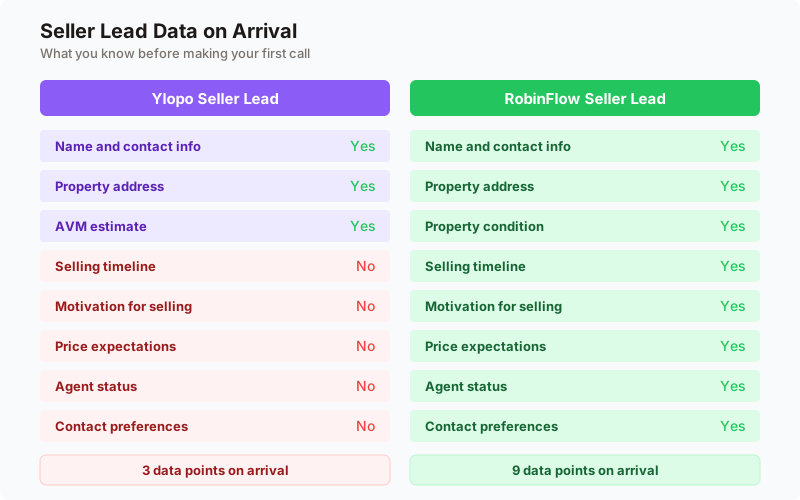
This is the practical difference that matters most in your day-to-day workflow. Here's what each platform gives you when a seller lead arrives:
| Data Point | Ylopo Seller Lead | RobinFlow Seller Lead |
|---|---|---|
| Name and contact info | Yes | Yes |
| Property address | Yes | Yes |
| Automated valuation | Yes (HouseCanary + ATTOM AVM) | Optional (agent-controlled) |
| Selling timeline | No — AI attempts to extract via text | Yes — captured in flow |
| Motivation for selling | No | Yes — captured in flow |
| Price expectations | No | Yes — captured in flow |
| Whether they have an agent | No | Yes — captured in flow |
| Contact preferences | No | Yes — captured in flow |
| Property condition | No | Yes — captured in flow |
With a RobinFlow lead, your first call can be: "Hi Sarah, I see you're thinking about selling your 4-bedroom on Oak Street in the next 3 months because you're relocating. You mentioned you think it's worth around $425K — I actually have some recent comps that support that. When's a good time for me to walk through the property?"
With a Ylopo seller lead, your first call is: "Hi, I saw you requested a home valuation. Are you thinking about selling?" — which is the same opening every other Ylopo agent in your market is using, because rAIya sent them the same lead notification.
Day-in-the-Life: Working Seller Leads on Each Platform
To understand the practical difference, walk through a typical Tuesday morning for two agents — one using Ylopo, one using RobinFlow — who each have 5 new seller leads to work.
Agent A (Ylopo):
- 8:00 AM: Log into Follow Up Boss. Five new leads from yesterday's home valuation ads. Each has a name, email, phone, and property address. rAIya has already sent the initial text message and is reporting two have responded.
- 8:15 AM: Call lead #1. No answer. Leave voicemail: "Hi, I noticed you requested a home valuation for 123 Oak Street. I'd love to chat about your home's value and what's happening in your neighborhood."
- 8:20 AM: Call lead #2. Answers. "Oh, I was just curious what my house was worth. I'm not really selling." You spend 8 minutes trying to qualify them. They're a tire-kicker — 3 years from selling, just checking equity.
- 8:30 AM: Call leads #3–5. One doesn't answer, one says they already have an agent, one says they were looking for a buyer — they didn't realize it was a seller form.
- 8:45 AM: Five leads worked. Zero appointments. rAIya will continue texting all five for 90 days.
Agent B (RobinFlow):
- 8:00 AM: Open CRM. Five new leads from yesterday's Facebook ad → question flow. Each has a name, phone, address, plus selling timeline, motivation, price expectations, and whether they have an agent.
- 8:05 AM: Sort by timeline. Two are "3–6 months," two are "just exploring," one is "ready now — relocating." Start with the relocation lead.
- 8:10 AM: Call the relocation lead: "Hi Maria, I see you're relocating and thinking about selling your 3-bed on Elm Street. You mentioned you think it's worth around $380K — I actually pulled some comps yesterday and that's right in the range. When can I come by for a quick walk-through?" Appointment booked for Thursday.
- 8:20 AM: Call the two "3–6 month" leads. One answers, confirms they're downsizing after the kids leave in August. Set a follow-up call for next month with a CMA in hand.
- 8:35 AM: Tag the "just exploring" leads for a 30-day automated follow-up sequence.
- 8:40 AM: Five leads worked. One appointment booked, one warm follow-up scheduled, two in nurture. The "ready now" lead will likely list within 60 days.
Same number of leads. Same time investment. Fundamentally different outcomes — because the data captured during the initial form submission determines the quality of every subsequent interaction.
7. Head-to-Head Comparison
| Capability | Ylopo | RobinFlow |
|---|---|---|
| Primary focus | Buyer leads (seller leads secondary) | Seller leads (purpose-built) |
| Lead generation method | Facebook/Google ads → IDX site → AI nurture | Any traffic source → question-flow landing page |
| Seller lead mechanism | Home valuation Google PPC ads | Multi-step question flows capturing intent |
| Monthly platform cost | $295–$795+ (before ad spend and CRM) | Free tier available |
| All-in monthly (solo agent) | $1,364–$2,100 | Agent-controlled ad spend only |
| Setup fee | $1,000–$2,000 | None |
| CRM requirement | External CRM required (no native) | Works with any CRM |
| AI Voice CRM lock-in | Requires Follow Up Boss specifically | No CRM lock-in |
| Contract / cancellation | 90-day cancellation notice | No long-term contract |
| Lead exclusivity | Non-exclusive (shared ecosystem) | Always exclusive (your traffic, your leads) |
| Seller data depth | Address + contact + AVM estimate | Address + contact + timeline + motivation + price expectations + condition + agent status |
| Time to first listing | 3–6 month ramp-up typical | 30–90 days for qualified leads |
| Cost per seller closing | $2,400–$4,800 estimated | $800–$1,600 estimated (ad spend dependent) |
| Traffic source | Platform-managed Facebook/Google ads | Agent drives own traffic (any channel) |
| Market saturation risk | High (7,000–10,000+ agents on same platform) | None (your branded pages, your market) |
| SEO value | Near-zero (template IDX sites) | Your landing pages build your domain authority |
| Data ownership | Platform-dependent; website deactivated on cancellation | Your leads, your data, portable |
8. Where Ylopo Wins — And Where It Doesn't
Ylopo's Genuine Strengths
To be fair, Ylopo has real advantages over RobinFlow in specific scenarios:
- Buyer lead volume. If you need 50–100+ buyer leads per month at a low CPL, Ylopo's DARE system and Facebook retargeting are among the best in the industry. No seller-focused platform can match that volume.
- Done-for-you ad management. Ylopo creates and manages your Facebook and Google campaigns. You don't need to learn ad platforms. RobinFlow gives you the landing page but requires you to drive your own traffic — or hire someone to run your ads.
- AI speed-to-lead. rAIya responds within 60 seconds, 24/7. That speed-to-lead advantage is real — studies show the likelihood of qualifying a lead drops 10x if you wait more than 5 minutes to respond. For high-volume teams that can't staff immediate phone response, rAIya fills a critical gap.
- Listing presentation tools. The Buyer Heatmap — showing a seller visual proof of real-time buyer demand in their area — is a genuinely useful tool for winning listing appointments you've already secured. RobinFlow doesn't offer a comparable presentation feature.
Where Ylopo Falls Short for Seller Leads
- Lead quality for seller-specific use. A 3/10 quality rating with 50–70 leads per deal is manageable if you have ISAs working through buyer leads. For seller leads specifically, the ratio is worse because home valuation requests are heavily curiosity-driven.
- Data depth on arrival. The single biggest differentiator. When a Ylopo seller lead arrives, you know their address. When a RobinFlow seller lead arrives, you know their address, timeline, motivation, price expectations, and contact preferences. That data gap compounds through every stage of your follow-up.
- Cost per seller closing. At $2,400–$4,800 per seller deal versus $800–$1,600 for intent-captured leads, the economics favor purpose-built seller capture by a factor of 2–3x.
- Saturation in competitive markets. 7,000–10,000+ agents using the same platform, same AI, same scripts. Your seller prospect may be receiving the same automated text from multiple Ylopo agents in your market.
- No owned asset. Ylopo's IDX site is rented — when you cancel, your website is deactivated after 90 days. A RobinFlow landing page on your domain builds your brand equity whether you continue using the platform or not.
9. The Traffic Tradeoff — An Honest Assessment
The most common objection to RobinFlow versus Ylopo: "I don't want to run my own ads."
This is a legitimate concern and it deserves a direct answer. Ylopo manages your Facebook and Google campaigns end-to-end. You log in, see leads, work them. RobinFlow gives you a high-converting landing page and requires you to drive traffic to it — via Facebook ads, Google ads, direct mail, social media, your existing email list, or organic search.
For agents who have zero interest in learning ad platforms and no budget to hire someone who does, Ylopo's done-for-you model removes a real barrier. You pay more per lead and per deal, but you pay with money instead of time and learning curve.
But consider this: according to our Facebook Ads for Seller Leads guide, the average real estate agent spending $500/month on Facebook ads to a seller-focused landing page generates 15–35 seller leads per month at $15–$35 per lead (2026 Facebook seller lead benchmarks, AmpliFire, 2026). If those leads come through a question flow that captures timeline and motivation, you're looking at 15–35 pre-qualified seller leads per month — compared to Ylopo's blended output where seller leads are a fraction of the total and arrive with minimal qualification data.
The math on a $1,500/month budget:
| Scenario | Monthly Spend | Seller Leads/Month | Data per Lead | Estimated Time to First Listing |
|---|---|---|---|---|
| Ylopo (all-in) | $1,500 | 8–15 seller leads (fraction of 60–80 total) | Address + contact + AVM | 3–6 months |
| Facebook ads → RobinFlow | $1,500 | 30–60 seller leads (all seller-focused) | Address + timeline + motivation + expectations | 30–90 days |
Same budget. Double to quadruple the seller-specific leads. Richer data on every lead. Faster conversion timeline. The tradeoff is that you need to set up and manage (or outsource) the ad campaigns — a one-time learning curve that pays permanent dividends.
See what pre-qualified seller leads look like
Build a branded question-flow landing page that captures seller intent — timeline, motivation, expectations — before your first call. Works with any CRM, any ad channel.
10. When to Choose Ylopo Over RobinFlow
Despite the seller lead comparison favoring RobinFlow, there are real scenarios where Ylopo is the better choice:
- You're a team with ISAs who need high-volume buyer AND seller leads. If you have dedicated inside sales agents to work through 50–70 leads per deal, Ylopo's volume at low CPL makes financial sense — especially on the buyer side. Add seller leads as a bonus, not the primary goal.
- You want a fully managed, hands-off ad system. If you have zero capacity to manage or outsource ads and need leads to start flowing immediately, Ylopo's done-for-you model removes a real barrier. Accept the higher cost per deal as a convenience premium.
- You're in years 1–2 and need practice leads. New agents benefit from high lead volume to sharpen their scripts and conversion skills. Ylopo delivers that volume (AgentAdvice, 2026). The leads are lower quality, but the practice is valuable. Just don't mistake volume for business health.
- You need the Buyer Heatmap for listing presentations. If you're already getting listing appointments and need a competitive edge in the presentation, Ylopo's Buyer Heatmap showing real-time buyer demand in the seller's area is a genuinely differentiated tool.
11. When to Choose RobinFlow Over Ylopo
RobinFlow is the stronger choice for agents whose primary growth constraint is seller leads — not buyer leads, not total lead volume, but actual listing appointments:
- You're a listing-focused agent. If 60%+ of your revenue comes from listings, a platform purpose-built for seller capture will outperform one where seller leads are an afterthought.
- You want seller-specific qualification data. Timeline, motivation, price expectations, and agent status on arrival — not after 90 days of AI texting.
- You're cost-conscious and want transparent pricing. Free to start, scale when you see results, no $1,000+ setup fee, no 90-day cancellation trap.
- You're in a saturated market. Your branded question-flow pages can't be duplicated by other agents in your market — unlike Ylopo's shared ecosystem where competitors use the same platform, AI, and messaging.
- You already run ads (or will learn). If you're running Facebook ads for your business — or willing to invest 4–6 hours learning — directing that traffic to a high-converting question flow delivers better seller leads at lower cost per deal than routing it through a multi-purpose platform.
- You want to own your data. When you leave Ylopo, your website is deactivated. A RobinFlow landing page on your domain builds your brand equity permanently. Your leads, your data, your asset.
12. Building a Combined Strategy
The smartest agents don't choose one platform exclusively — they allocate budget based on what each tool does best. Here's how Ylopo and RobinFlow can work together in a multi-channel strategy:
The Recommended Stack for Listing-Focused Teams
| Goal | Tool | Monthly Budget | Expected Output |
|---|---|---|---|
| Seller leads (primary) | Facebook/Google ads → RobinFlow question flows | $500–$1,500 | 15–60 pre-qualified seller leads/month |
| Buyer leads (secondary) | Ylopo Suite + DARE retargeting | $800–$1,500 | 40–80 buyer leads/month |
| Active prospecting | REDX expired/FSBO data | $200–$350 | Daily prospecting list |
| Follow-up automation | Your CRM (Follow Up Boss, Sierra, etc.) | $69–$500 | Automated drip sequences |
In this stack, each tool handles its strongest use case. Ylopo generates buyer leads at scale with AI nurture — what it was built for. RobinFlow captures seller leads with intent data — what it was built for. REDX provides daily prospecting fuel. Your CRM ties it all together with follow-up sequences.
Budget Scenarios by Agent Profile
Solo Agent, $500–$1,000/month Budget
At this budget, you cannot afford Ylopo's all-in cost. Period. The platform fee plus recommended ad spend plus CRM exceeds your total budget before generating a single lead. Focus on:
- $300–$600/month: Facebook ads → RobinFlow seller question flows
- $100–$200/month: REDX for expired listing data
- $100–$200/month: Sphere-of-influence touches
- $0 on Ylopo (revisit at $2,000+/month total lead gen budget)
Growing Team, $2,000–$3,500/month Budget
You have room for a multi-channel approach:
- $800–$1,200/month: Facebook/Google ads → RobinFlow for seller leads
- $800–$1,500/month: Ylopo Suite for buyer leads and retargeting
- $200–$350/month: REDX + dialer for active prospecting
- $200–$500/month: CRM (Follow Up Boss recommended if using Ylopo AI Voice)
Established Team, $4,000+/month Budget
Full stack deployment:
- $1,500–$2,500/month: RobinFlow seller capture at scale (multiple landing pages by market segment)
- $1,500–$2,500/month: Ylopo Suite+ with AI Voice for buyer leads
- $350/month: REDX Pro for multi-line dialing
- $500–$1,000/month: Follow Up Boss (required for Ylopo AI Voice)
- Remaining: Content marketing, farming campaigns, sphere cultivation
13. Common Objections — Addressed Directly
"Ylopo's AI is more advanced than anything RobinFlow offers."
Ylopo's rAIya AI is genuinely impressive for lead nurture — 48% text response rate, 45% voice answer rate, 68 million+ conversations. But AI nurture and lead capture are different jobs. rAIya excels at engaging a lead after they've filled out a form — trying to extract qualification data through conversation over 90 days. RobinFlow's question flow captures that qualification data during the initial form submission, before any follow-up is needed. The question is whether you'd rather have AI try to qualify leads over weeks, or have the leads qualify themselves in minutes.
"Ylopo manages my ads so I don't have to learn Facebook."
True — and that's a real benefit for agents with zero ad experience. But consider the long-term cost. At $1,364–$2,100/month all-in for a solo agent versus $500–$1,500/month running your own ads to a RobinFlow page, the done-for-you convenience premium is $864–$600/month. Over a year, that's $7,200–$10,000+. For that amount, you could hire a local PPC specialist part-time and still save money — while building an asset (your ad account data and targeting) that you own permanently.
"I need buyer leads too — Ylopo handles both."
Correct. If your business model requires both buyer and seller leads from a single platform, Ylopo is the more complete solution. RobinFlow is seller-focused and doesn't generate buyer leads. The counter-argument: purpose-built tools outperform multi-tools for each specific job. A platform that's excellent at buyer leads and mediocre at seller leads will underperform a setup that's excellent at both — using the right tool for each category. See the combined strategy in Section 12.
"Ylopo has 7,000+ agents — that proves it works."
Adoption proves product-market fit for the platform's core use case (buyer lead volume at low CPL). It doesn't prove seller lead effectiveness specifically — and the platform's own reviewers consistently note that buyer leads outperform seller leads on the platform. High adoption also creates the saturation problem discussed in Section 5: the more agents use Ylopo in your market, the less differentiated your outreach becomes. Your seller prospect may be receiving the same rAIya text from four or five agents within minutes. Market share for the platform translates directly into market dilution for each individual agent using it. Ask yourself: would you rather be one of 8 agents on Ylopo in your zip code, or the only agent with a branded question-flow page targeting sellers in your specific farm area?
14. ROI Calculation: 12-Month Investment Comparison
Let's run the full 12-month math for a solo listing-focused agent spending $1,500/month on lead generation. These numbers use the benchmarks cited throughout this guide.
Scenario A: Ylopo All-In for 12 Months
| Line Item | Monthly | 12-Month Total |
|---|---|---|
| Setup fee (one-time) | — | $1,500 |
| Ylopo Suite (base) | $395 | $4,740 |
| rAIya AI Text + Voice | $200 | $2,400 |
| AI Voice setup (one-time) | — | $250 |
| Follow Up Boss (required for AI Voice) | $69 | $828 |
| Ad spend (Google + Facebook) | $750 | $9,000 |
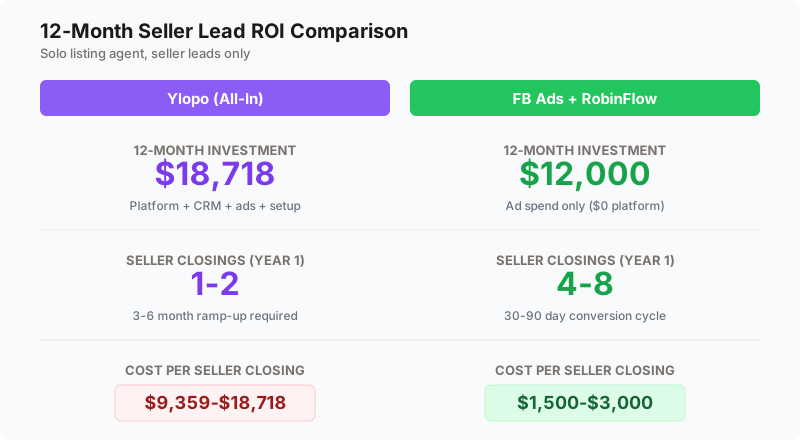
| Total investment | $1,414 | $18,718 |
Expected seller lead output: At $750/month ad spend split between Facebook and Google, generating roughly 30–40 total leads/month (blended buyer/seller). Seller leads represent an estimated 20–30% of total volume (estimated; Ylopo's platform skews buyer-heavy per InboundREM, 2026): ~6–12 seller leads/month. At 1.5% seller close rate after 3–6 month ramp-up: 1–2 seller closings in months 7–12. Year-one seller closings: 1–2.
Cost per seller closing: $9,359–$18,718.
Scenario B: Facebook Ads → RobinFlow for 12 Months
| Line Item | Monthly | 12-Month Total |
|---|---|---|
| RobinFlow platform | Free tier | $0 |
| Facebook ads (seller-focused campaigns) | $1,000 | $12,000 |
| Existing CRM (already paying) | $0 incremental | $0 incremental |
| Total investment | $1,000 | $12,000 |
Expected seller lead output: At $1,000/month Facebook seller ads at $20–$30/lead, generating 33–50 seller leads/month — all seller-focused, all with intent data. At an estimated 3–5% close rate on intent-qualified leads (industry range for pre-qualified seller leads; compare to Ylopo's 1.5–2% blended rate per DMR Media, 2026) with 30–90 day conversion: first listing within 60–90 days. Year-one seller closings: 4–8.
Cost per seller closing: $1,500–$3,000.
The Differential
Same-budget comparison: $12,000 annual investment in RobinFlow produces 2–6x more seller closings than $18,718 invested in Ylopo — while costing $6,718 less. The math isn't close, and it gets worse for Ylopo over time because the 90-day cancellation period means you're paying for at least 3 months even if you decide to switch.
To be clear: this comparison isolates seller leads specifically. If you need buyer leads, Ylopo's buyer-side economics are significantly better — that's the platform's core strength and where its technology genuinely shines. The point isn't that Ylopo is a bad platform — it's an excellent platform for its intended purpose. But using a buyer-lead platform for seller lead generation is like using a sedan to haul lumber. The vehicle works, it gets you from point A to point B, but it's fundamentally the wrong tool for the specific job you're hiring it to do.
15. Decision Framework: Five Questions to Ask Yourself
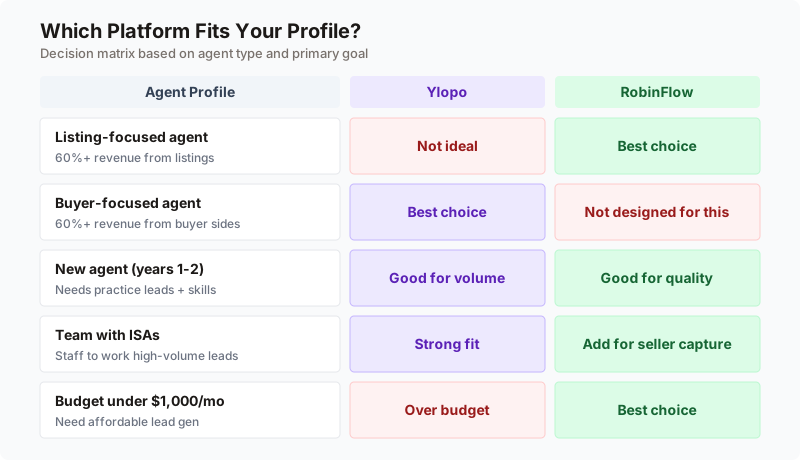
Cut through the comparison and answer these five questions. Your answers will point you to the right platform:
- What percentage of your target revenue comes from listings vs. buyer sides?
- 60%+ listings → RobinFlow
- 60%+ buyer sides → Ylopo
- Balanced → Consider both (Section 12 combined strategy)
- Do you have ISAs or team members to work through high-volume, low-intent leads?
- Yes → Ylopo's volume model works with staff to convert it
- No → RobinFlow's pre-qualified leads are more solo-agent-friendly
- Are you willing to run (or outsource) your own ad campaigns?
- Yes → RobinFlow + your ads = lower cost per seller deal
- No, and unwilling to learn → Ylopo's done-for-you model, despite higher cost
- What's your monthly lead generation budget?
- Under $1,000/month → RobinFlow (Ylopo's all-in cost exceeds this budget)
- $1,000–$2,000/month → Either, depending on answers above
- $2,000+/month → Potentially both in a combined strategy
- How saturated is your market with Ylopo agents?
- Ask during your demo: "How many agents in [your zip code] are currently on Ylopo?" If they won't answer, assume the worst.
- High saturation → RobinFlow (your branded pages, your market)
- Low saturation → Ylopo's volume model may still deliver differentiated outreach
16. Frequently Asked Questions
Can I use Ylopo just for seller leads and skip the buyer side?
Technically yes — you can focus your ad budget on Google PPC home valuation campaigns and ignore buyer-side DARE ads. But you'd be paying $295–$795+/month for a platform whose strongest features (dynamic property ads, IDX retargeting, listing rocket) are buyer-focused. You'd be renting a sports car to drive to the mailbox. The seller tools exist, but they're not what you're paying the premium for. If seller leads are your sole goal, a purpose-built tool delivers more for less.
Does RobinFlow do any AI lead nurture like rAIya?
RobinFlow focuses on the capture layer — the question flow that pre-qualifies sellers. For ongoing nurture, it integrates with your CRM's automation (Follow Up Boss, Sierra Interactive, kvCORE, or any other). The philosophy is different: instead of using AI to extract qualification data from a cold lead over 90 days, capture that data upfront so your CRM's automated sequences can reference specific details from day one. The result: your automated follow-up says "I noticed you're thinking about selling in 3 months because you're downsizing" instead of the generic "Are you still interested in selling?" that every AI texting service sends.
What if I'm already on Ylopo and want to add RobinFlow?
They complement each other well. Keep Ylopo running your buyer lead campaigns — that's where it excels. Add RobinFlow as your seller-specific capture layer: run a separate Facebook campaign targeting seller-intent audiences (homeowners, equity-rich demographics, life-event targeting) and direct that traffic to a RobinFlow question-flow landing page. Both feed into your CRM. You'll quickly see the difference in lead quality between Ylopo's home valuation leads and RobinFlow's pre-qualified seller leads — and can allocate budget accordingly.
Is Ylopo's AI Voice worth the Follow Up Boss requirement?
If you're already on Follow Up Boss, AI Voice is a worthwhile add-on for high-volume teams — it solves the speed-to-lead problem for teams that can't staff immediate phone response. The 45% answer rate and 9% transfer rate (vendor-claimed) mean roughly 4% of leads become qualified conversations without agent effort. For a team generating 100+ leads/month, that's 4 pre-set appointments. At $100/month plus $250 setup, the math works if you close even one of those appointments per quarter. But if you're not on Follow Up Boss, the combined cost of switching CRMs plus the AI Voice subscription rarely justifies the incremental benefit over a well-built CRM automation sequence.
How long does it take to set up each platform?
Ylopo setup takes 2–4 weeks including IDX site configuration, ad account integration, CRM connection, and AI training on your market. The $1,000–$2,000 setup fee covers this onboarding. RobinFlow setup takes 1–2 hours: choose your question flow template, customize questions and branding, connect your CRM webhook, and go live. You can have a working seller capture page generating leads the same afternoon you start. The speed difference matters if you need leads now versus next month.
What happens to my leads if I cancel either platform?
With Ylopo, your IDX website is deactivated 90 days after cancellation. Leads already exported to your CRM stay in your CRM. But any leads still in Ylopo's pipeline, any retargeting audiences built in their ad accounts, and any organic presence built on their IDX domain — gone. With RobinFlow, your leads are in your CRM from the moment they complete the question flow. If you stop using RobinFlow, your existing leads are unaffected. If your landing pages are on your own domain, they continue to exist.
17. The Bottom Line
Ylopo is an excellent platform for what it was designed to do: generate high volumes of buyer leads through AI-powered Facebook and Google advertising, with automated nurture that keeps working while you sleep. The technology is real. The AI stats are impressive. For buyer-focused agents and teams with ISAs, it delivers.
But for agents whose primary goal is winning more listings, Ylopo's seller lead capabilities are a secondary feature on a buyer-lead platform. Seller leads arrive with minimal qualification data. They cost $2,400–$4,800 per seller closing on a blended basis. And in competitive markets, your prospects are receiving the same AI-driven outreach from multiple Ylopo agents simultaneously.
RobinFlow was built for a single purpose: capturing seller intent. Every homeowner who completes a question flow has told you their timeline, motivation, price expectations, and contact preferences — data that no amount of AI follow-up can extract as reliably or as quickly. The cost per seller closing runs 2–3x lower. There's no $1,000+ setup fee, no 90-day cancellation trap, and no market saturation problem because your landing pages are branded to you.
The smartest approach for most agents: use each tool for its strongest use case. Ylopo for buyer volume. RobinFlow for seller capture. Each doing what it was built to do.
If you're currently on Ylopo and considering adding seller-specific capture, the transition is simple: keep Ylopo running your buyer campaigns while directing a portion of your seller-focused ad budget to a RobinFlow question flow. Run both for 90 days and compare the data side by side — seller leads generated, data depth on arrival, time to first appointment, and cost per listing. The numbers will tell you where to allocate your budget going forward.
If you're evaluating both platforms for the first time, start with the question that matters most: do I need more buyer leads, or more listings? If buyer leads, Ylopo is the established leader. If listings, RobinFlow was built for exactly that problem. If both, use both — but budget each for its actual strength rather than hoping one platform will be world-class at everything.
The agents who win in 2026 aren't the ones spending the most on lead generation. They're the ones spending most efficiently — matching every dollar to the tool that converts it into the specific outcome they need. For seller leads, purpose beats volume every time.
Ready to start capturing seller intent? RobinFlow is free to start — build a branded question-flow landing page, connect your CRM, and start generating pre-qualified seller leads before your next ad dollar is spent. Get started here.
Ready to capture seller intent instead of sorting through volume?
Launch a branded question-flow landing page, pre-qualify sellers automatically, and get leads who already told you they want to sell.
Get Started Free